Dhishops — Platform & Architecture Standardization
Evolving a standalone system into a scalable, secure, and automated multi-storefront platform.
After the standalone system matured, this phase focused on platform-level improvements. The goal was to make Dhishops easier to deploy, safer to operate, and ready to scale across multiple independent storefronts through architectural standardization and operational automation.
Context
As the number of Dhishops stores increased, maintaining multiple storefronts began to expose architectural challenges. Each store required consistent updates, improved security practices, and a cleaner separation between public-facing assets and writable data.
The objective was to standardize the entire shop architecture, allowing the platform to scale reliably while keeping the system lightweight. This also laid the groundwork for the Central Master (CM) architecture, connecting multiple storefronts to a shared infrastructure.
What this phase demonstrates
- Platform architecture design and standardization
- Multi-store deployment and maintainability
- Security improvements through proper file isolation
- Operational automation for store updates
- Backend UX improvements for product management
- Early groundwork for API-driven and database-backed architecture
Key Upgrades
1. Standardized Shop Architecture
All Dhishops stores were reorganized into a consistent structure to ensure maintainability:
- Separated public-facing files from writable system data.
- Introduced a
/publicand/dataseparation for improved security. - Created a clean deployable template for rapid store launches.
2. Secure Data Isolation (API Layer)
- Moved all writable files outside the public directory.
- Introduced a new API layer to handle reading/writing operations securely.
- Reduces exposure of sensitive data and prepares the system for future SQL-based migration.
3. Git-Based Deployment & Rollouts
- Version Control: Each store now resides in its own Git repository.
- Automated Updates: Core platform improvements can now be deployed across all client stores simultaneously.
- Stability: Simplified maintenance and rollback processes for operational stability.
4. Feature Expansions
- Bulk Product Import: Merchants can now upload CSV/Excel files, significantly reducing onboarding time.
- Messaging Integrations: Telegram bots notify owners of new orders/messages, and WhatsApp support was added for customer communication.
- Backend UX: Added lightbox previews to the product grid for better administrative usability.
Outcome
This phase transformed Dhishops from a collection of individual storefronts into a structured multi-shop platform. By standardizing the structure and implementing Git-based workflows, the platform is now significantly easier to maintain and expand.
Final Thoughts
This project was a crucial stepping stone. It moved the focus from "features" to "infrastructure," ensuring that as the client base grows, the workload for maintenance doesn't grow exponentially with it.
Built with a focus on System Architecture, Security, and Scalability.
Project Documentation & Previews
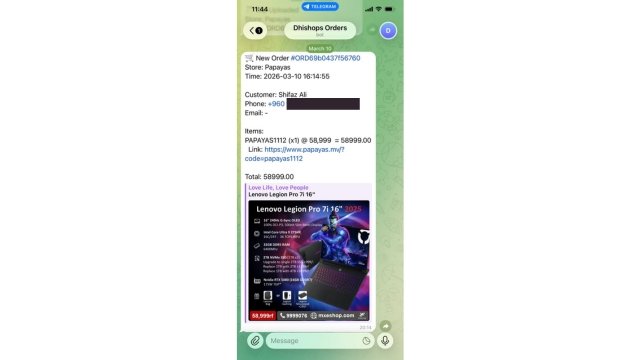
Automated messages coming through Telegram Bot.
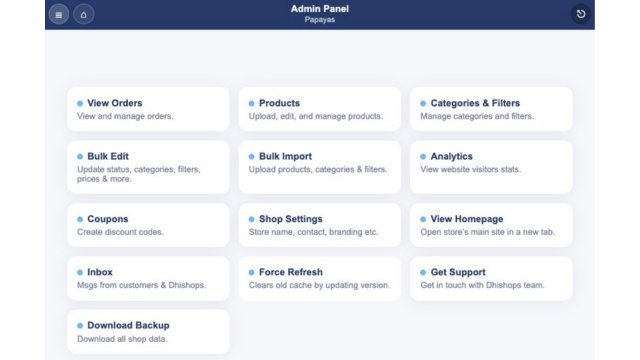
Backend tabs currently. From 4 initially to 13 now in 5 months.